CARE GUIDES
How to Care for a Teak Cutting Board: Cleaning, Oiling, and Storage
How to care for a teak cutting board: wash, dry, oil, and store it with simple steps for everyday use.
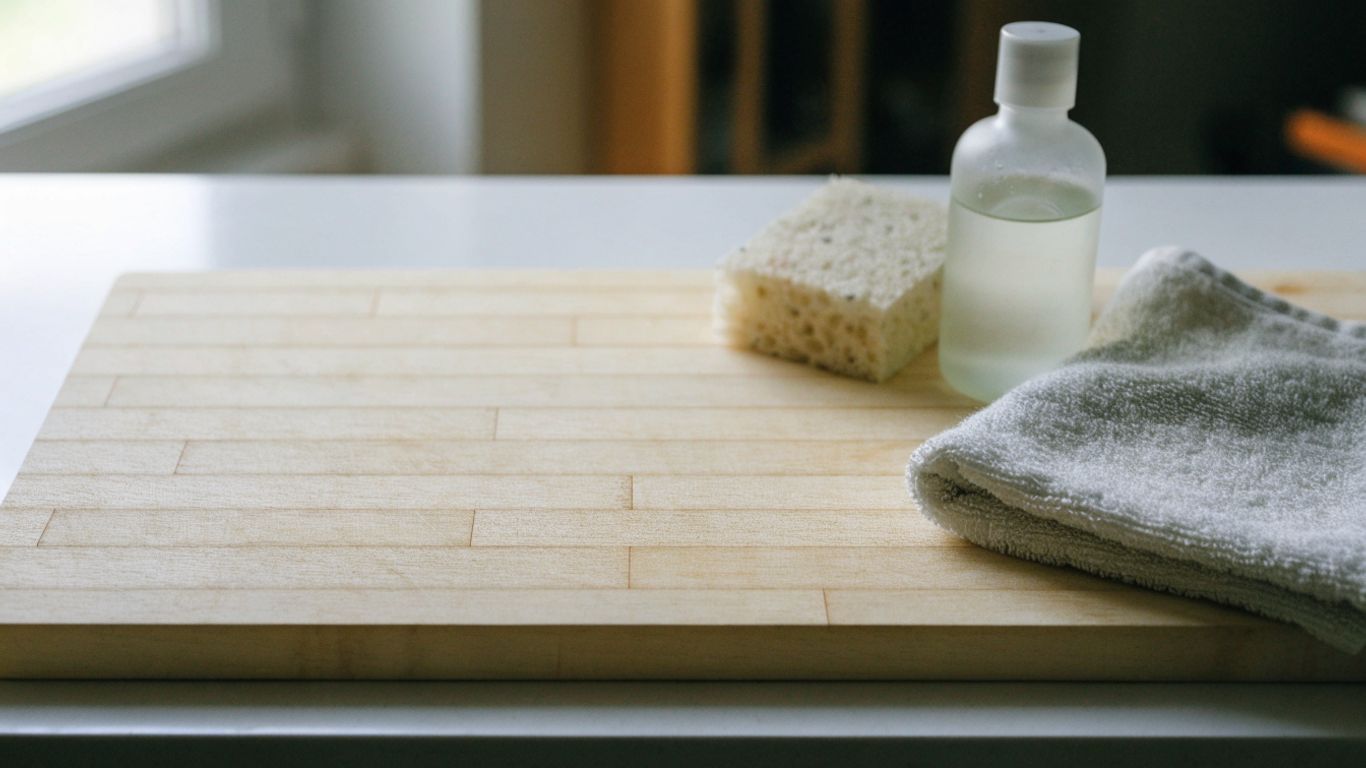
The short answer
Teak has natural oils, but it still needs simple, regular care. Hand-wash it, dry both sides, and oil it when its surface starts to look dry.
- Scrape off scraps, then wash the board with warm water and mild dish soap.
- Clean both sides and towel-dry the board right away and stand it on edge with airflow around it.
- Never soak a teak board or put it in the dishwasher.
- Apply a thin coat of food-safe cutting board oil when the surface looks faded or dry.
- Clean and sanitize the board carefully after raw meat, and replace it if deep cracks or persistent mold make it unsafe to use.
What makes teak different from other cutting board woods?
The practical answer to how to care for a teak cutting board is to wash it by hand, dry it fully, and oil it when its surface looks dry. Teak’s natural oils and dense grain can help it resist moisture, but they do not make it waterproof or maintenance-free. You still need to keep water from sitting on the board and clean food residue promptly.
How teak’s natural oils affect everyday care
Teak contains natural oils, which can make its surface feel less thirsty than some other woods. That is a useful starting point, not a reason to skip oiling altogether: repeated washing and regular knife use still affect the surface. Think of conditioning as upkeep for the board’s appearance and feel, rather than a way to make it impervious to water.
A teak board care guide offers another perspective on seasoning and oiling teak. The useful principle is straightforward: check the actual surface instead of assuming natural oils will take care of everything for you.
Why teak still needs prompt cleaning and thorough drying
Food juices, salt, and water can sit in knife marks or along the grain if you leave the board on the counter after cooking. Wash it soon after use, then dry it rather than letting it stay wet beside the sink. The trade-off is a small bit of attention now instead of a longer cleanup later.
This is the same everyday logic used for other wood boards. A maple cutting board care routine covers hand-washing, drying, oiling, and storage in more detail, while teak still benefits from those basic habits.
What to know about teak’s density and knife marks
Teak is dense, and its silica content may be hard on knife edges compared with some other board woods. Knife marks can still appear with regular use, so avoid treating a tough-looking surface as a surface that needs no care. For a concrete comparison, the End-Grain Maple Cutting Board is made from US-grown hard maple and measures 17 × 13 × 1.75 inches; that is a different wood and construction, not a reason to assume one board fits every kitchen.
How do you clean a teak cutting board after each use?
Clean a teak board by hand after every use with warm water and mild dish soap. You do not need a complicated routine, but you do need to remove food promptly and wash the whole surface. Follow these steps, especially when the board has held raw meat.
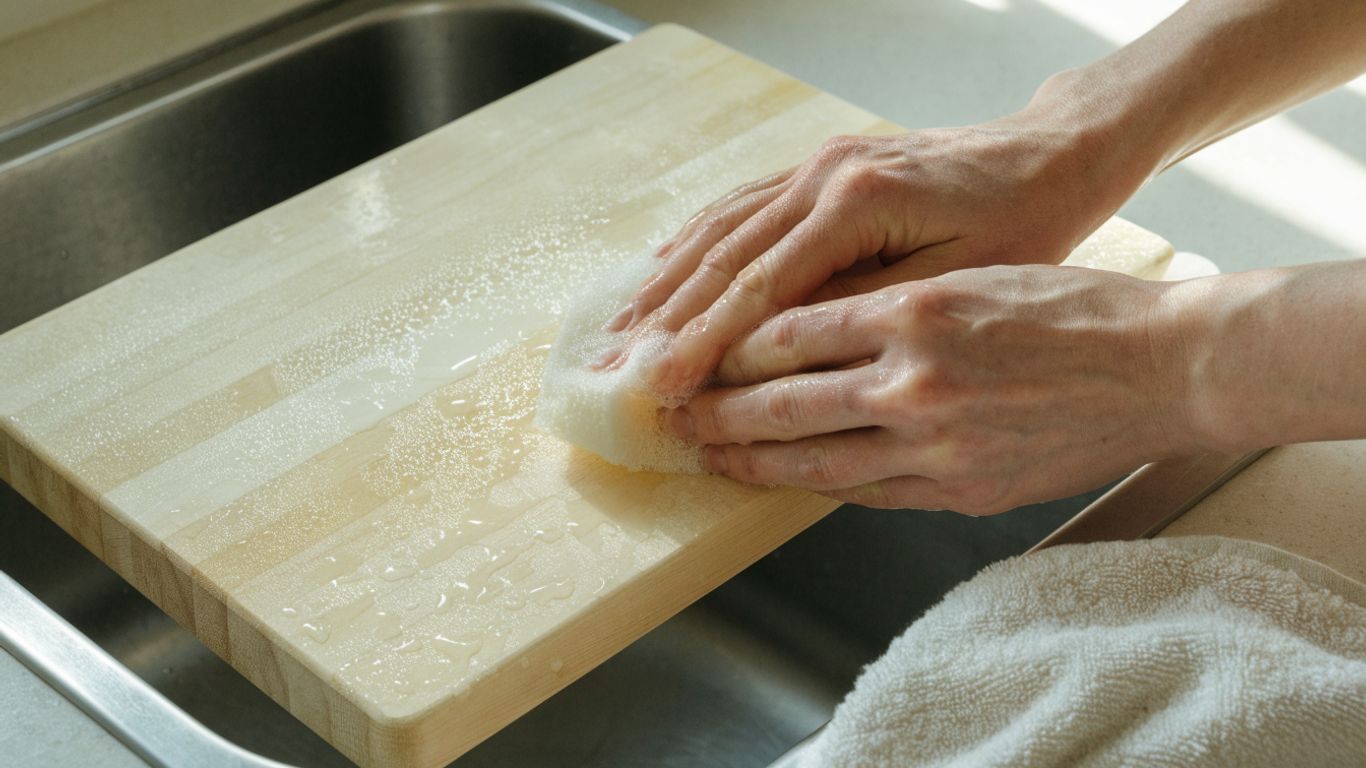
Scrape away food scraps before washing
Use a bench scraper or the back of a knife to push crumbs and scraps into the compost or trash before you turn on the tap. Scraping first keeps bits of food from collecting around the sink and makes the wash quicker. Use a light hand, since digging a sharp edge into the board only adds marks you will later have to clean.
Wash with warm water and mild dish soap
Wet the board, add a little mild dish soap, and scrub the face, edges, and corners with a soft sponge or dishcloth. Rinse away the suds promptly; the goal is a clean surface, not a long soak. Strong cleaners are unnecessary for an ordinary wash and can leave an unpleasant residue.
For everyday washing, a simple hand-cleaning routine is enough. If you want a visual reminder of the sequence, keep the steps plain: remove scraps, wash with soap, and rinse without leaving the board submerged.
Clean both sides to help prevent uneven drying
Wash both faces even if only one side touched the food. A quick rinse and wipe on the underside helps keep moisture exposure more even, which matters because wood responds to changes in moisture. Set the board up to dry rather than leaving one damp face pressed against the counter.
Sanitize the board after contact with raw meat
After raw meat, wash the board thoroughly with soap and water, then use a food-contact-safe sanitizer according to its label and USDA Food Safety and Inspection Service guidance. Keep the routine in this order so sanitizer is applied to a clean surface, not over food residue. A careful sequence is easier to remember than trying to fix a missed step later:
- Wash the board with warm water and dish soap.
- Rinse away soap and visible residue.
- Apply an appropriate food-contact sanitizer as directed, then let the board dry fully.
Do not mix cleaning products or improvise a stronger concentration. Once the board is clean, towel-dry it right away and stand it on edge and keep it separate from ready-to-eat foods until the cleaning process is complete.
How should you dry and store your board?
Dry the board promptly, then store it only after it is fully dry. A teak board can still absorb moisture, and uneven exposure may contribute to cupping or warping. Good airflow is the easy part: give both faces room to breathe instead of trapping one against a damp counter.
Towel-dry it and let air circulate around both sides
After rinsing, wipe the board with a clean towel, including the edges and underside. Then stand it so air can move around both faces. Towel-drying shortens the time the wood stays wet, while the open-air finish helps avoid leaving a hidden damp patch against the counter.
Store it upright or on a rack once it is fully dry
When the board is dry, store it upright in a rack or another stable spot with airflow on both sides. Keep it secure so it cannot slide or fall when you reach for it. If your storage space is tight, maple cutting board storage explains why upright storage and dry conditions matter.
Keep it away from dishwashers, soaking water, and direct heat
Never put a wooden cutting board in the dishwasher or leave it sitting in a sink of water. Long exposure to heat and moisture can stress the wood and may damage the board. Keep it away from hot burners, ovens, and other direct heat as well; a cutting board is not a trivet.
Prevent warping by avoiding long periods of uneven moisture
Wood expands and contracts as its moisture changes, so try not to leave the board wet on one face while the other dries. Washing both sides and storing the board upright helps make that exposure more even. It cannot guarantee that a board will never warp, but it avoids a common source of uneven drying.
When and how should you oil a teak cutting board?
Oil a teak board when its surface looks dry, faded, or rough, rather than following a calendar alone. Use food-grade mineral oil or a cutting board conditioner made for food-contact wood, and remove any excess after it has had time to soak in. Oiling is ordinary maintenance, not a coating that cancels out careful washing and drying.
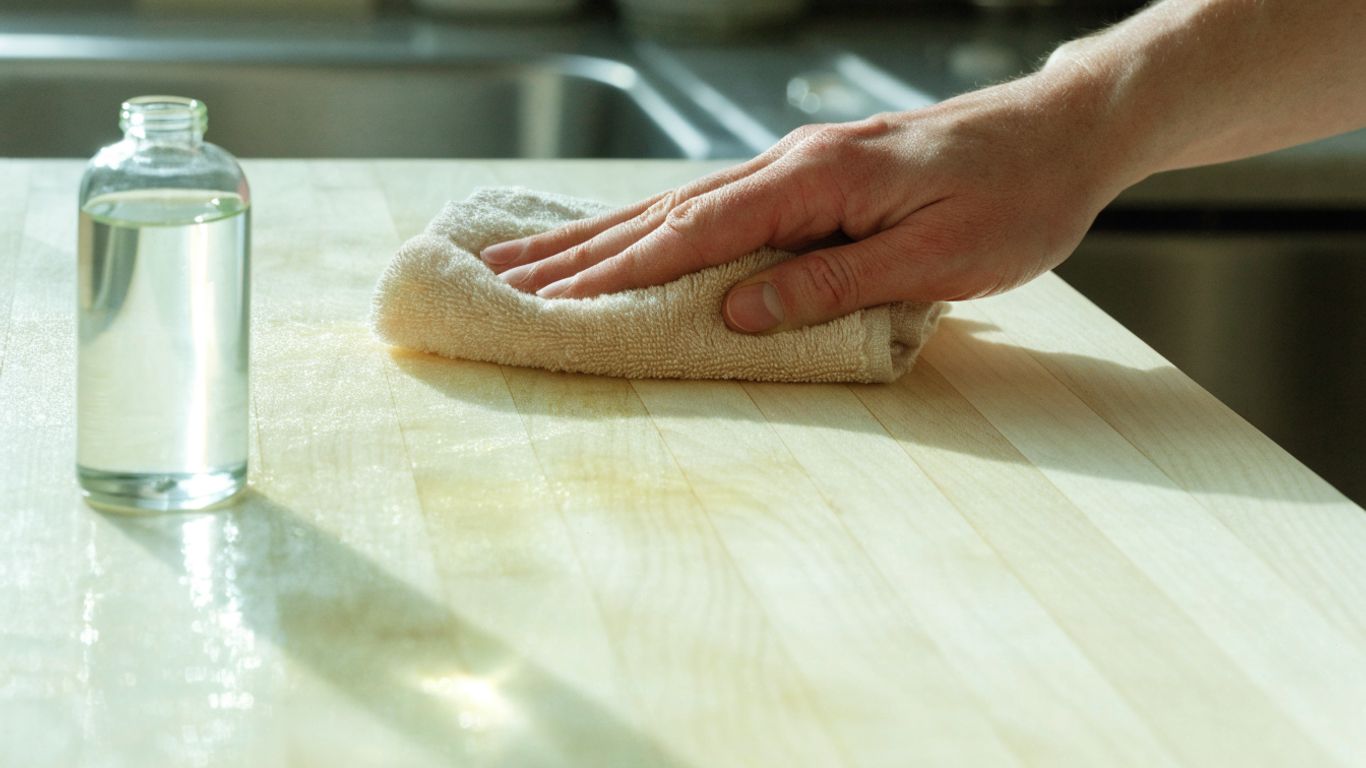
Look for a dry or faded surface rather than relying only on a calendar
Look over the board after it is clean and dry. A faded, dry-looking surface is a more useful prompt to oil than a date on the calendar, since use and washing vary from kitchen to kitchen. The signs below can help you decide what the board needs next.
| Surface condition | What to do |
|---|---|
| Even color and a comfortable feel | Keep cleaning and drying as usual. |
| Faded or dry-looking patches | Apply a thin coat of board oil or conditioner. |
| Rough spots or raised grain | Check that the board is fully dry, then consider light sanding before conditioning. |
These are practical cues, not a strict test. If the surface looks healthy, keep using your normal routine rather than adding oil simply because a certain number of weeks has passed.
Choose an oil or conditioner made for cutting boards
Food-grade mineral oil is a common choice for conditioning a board used with food. Board conditioners such as Bevel & Bond Board Balm combine food-grade mineral oil and beeswax. For more on choosing between them, this teak oiling guide discusses oil types and when to reapply.
Apply a thin, even coat and wipe away excess
Start with a clean, completely dry board. Spread a thin, even coat over the surface, edges, and underside, let it absorb, and wipe away any oil that remains on top. Bevel & Bond Board Balm is a mineral oil-and-beeswax conditioner, so use it as a thin surface treatment and buff away excess rather than leaving a pool on the wood.
Avoid cooking oils that can turn rancid
Do not use olive oil, vegetable oil, or other ordinary cooking oils to condition the board. They can turn rancid and leave an unpleasant smell or tacky surface. Stick with a product intended for cutting boards, and store it according to its label.
How do you handle stains, odors, and rough patches?
Start with gentle cleaning when a board develops a stain or odor, and only move to more involved care if the mark remains. Do not scrub so hard that you damage the surface, and avoid soaking the wood in an attempt to remove a smell. A little patience is often better than turning a small stain into a rough patch.
Lift food stains with gentle cleaning before trying stronger methods
Wash the area with warm water and dish soap, then dry the board and check the mark again. For a stain that remains, try a suitable gentle method before considering sanding. The maple board stain guide lays out options for different kinds of marks without making every discoloration a reason to refinish the board.
Neutralize lingering odors without soaking the wood
Wash the smelly area promptly and let the board dry with airflow around it. If an odor lingers, use a gentle deodorizing approach rather than leaving the board wet in the sink. Strong smells that remain after cleaning may point to residue caught in deeper knife marks, so inspect the surface before returning it to food prep.
Smooth minor roughness with fine sandpaper when needed
If a small area feels rough after cleaning and drying, light sanding with fine-grit sandpaper can smooth it. Work evenly and remove the sanding dust before applying a thin coat of board oil. Avoid aggressive sanding unless you are prepared to refinish the whole surface; a small raised patch rarely needs a full renovation.
Know when deep cracks or persistent mold call for replacement
Deep cracks are difficult to clean thoroughly, and persistent mold is a reason to stop using the board for food. Surface marks and ordinary wear are not automatically a safety problem, but damage that traps residue or cannot be cleaned is different. If the board has extensive damage or mold that returns after cleaning, replace it.
What does a simple long-term care routine look like?
A teak board’s care routine is mostly the same each time you use it: clean it, dry it, and put it away only when dry. Check the surface now and then for dryness, roughness, or damage, then oil as needed. That steady approach is more useful than trying to rescue the board after long periods of neglect.
Clean and dry the board after every use
Scrape away scraps, hand-wash with warm water and mild soap, and towel-dry both sides. If you used the board for raw meat, sanitize it using a product appropriate for food-contact surfaces and follow the label. The routine is quick when you do it before residue dries onto the wood.
Check the surface regularly for dryness or damage
When you wash the board, take a moment to look for dry patches, deep cuts, cracks, or persistent dark spots. You do not need to inspect it like a piece of lab equipment; just notice changes that affect cleaning or safe use. Address small rough patches early and stop using the board if damage makes it hard to clean.
Reapply oil as needed and keep the board out of standing water
If the wood looks faded or dry, apply a thin coat of food-safe mineral oil or a suitable cutting board conditioner and wipe away the excess. Keep the board away from soaking water and direct heat, and store it only when dry. A predictable routine helps you notice when its condition changes.
Use separate boards or clean carefully when switching between raw and ready-to-eat foods
Use a separate board for raw meat when that is practical. If you use the same board, wash and sanitize it thoroughly before preparing ready-to-eat food, following food-safety guidance and the sanitizer label. A clean board and a clear changeover are more reliable than trying to remember which side touched what.
What to remember when you care for a teak cutting board
Teak’s natural oils can make it a little less demanding than its reputation for durability might suggest, but they do not remove the need for care. Wash it by hand, dry both sides, keep it out of standing water, and oil it when the surface looks dry. Those habits help you keep the board clean and in useful condition without making maintenance a project.
Frequently Asked Questions
Can you put a teak cutting board in the dishwasher?
No. Wash it by hand with warm water and mild dish soap, then dry it promptly. Dishwasher heat and prolonged moisture can damage wood.
How often should you oil a teak cutting board?
Oil it when the surface looks dry or faded rather than relying only on a fixed schedule. Use food-grade mineral oil or a conditioner intended for cutting boards.
Can you use olive oil on a teak cutting board?
No. Ordinary cooking oils, including olive oil, can turn rancid or leave the surface unpleasant. Choose a product made for cutting boards instead.
How should you clean a teak board after raw meat?
Wash it thoroughly with warm water and dish soap, then sanitize it with a food-contact-safe product according to its label and food-safety guidance. Let it dry fully before using or storing it.
Should you wash both sides of a teak cutting board?
Yes. Clean both sides and dry the board so moisture exposure is more even. Stand it upright while it finishes air-drying.
How do you remove smells from a teak cutting board?
Wash the affected area and let the board dry with airflow around it. Avoid soaking the wood, which can create a separate moisture problem.
When should you replace a teak cutting board?
Replace it if deep cracks or persistent mold make it difficult to clean safely. Ordinary knife marks alone do not necessarily mean the board needs replacing.
What should you do next?
- Wash the board by hand and dry both sides after every use.
- Store it upright or on a rack, away from the sink and direct heat.
- Oil it with a cutting board oil when the surface looks dry or faded.
- See how a lighter board compares in how to care for a bamboo cutting board.
- Keep any groove clean with how to clean a cutting board juice groove.