CARE GUIDES
How to clean a cutting board juice groove safely and thoroughly
Learn how to clean a cutting board juice groove, remove residue, sanitize safely, and dry wood properly.
The short answer
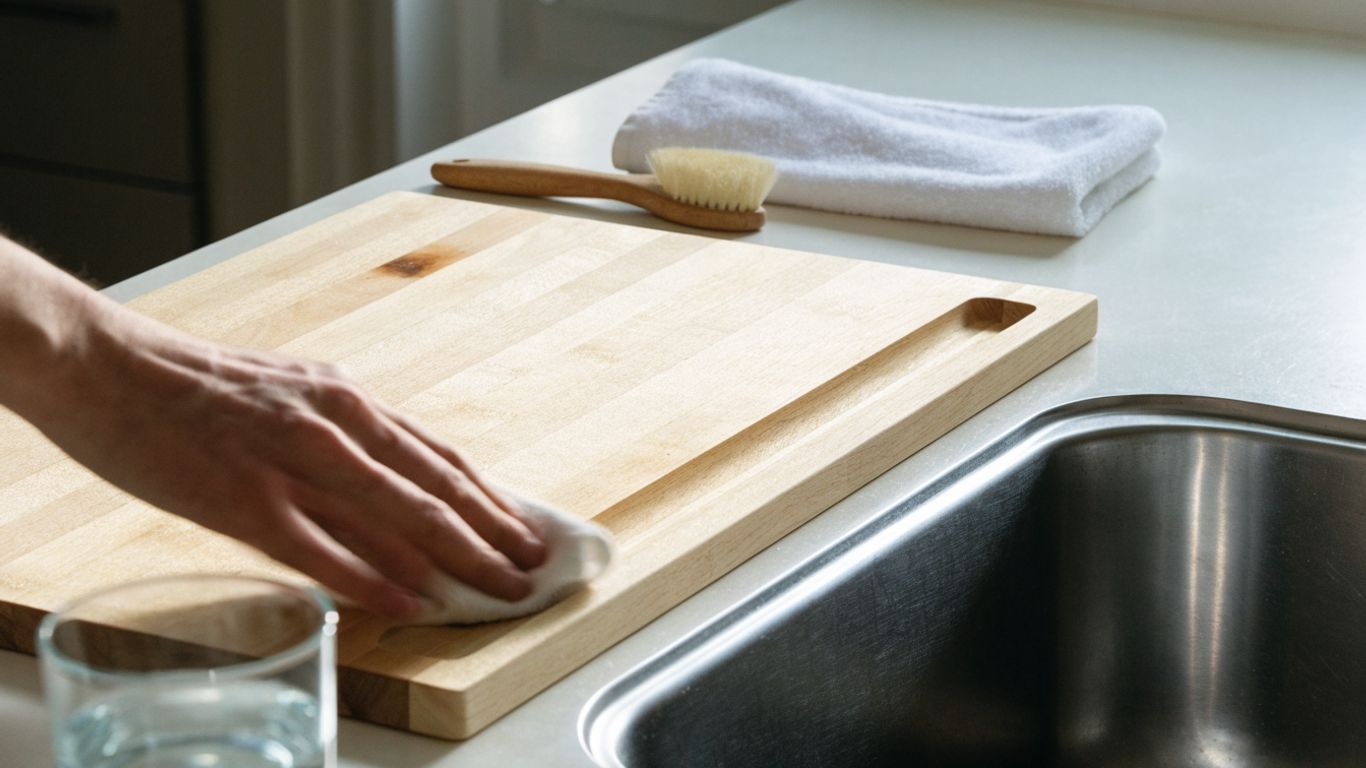
To clean a cutting board juice groove, clear out scraps, scrub the channel with warm soapy water, rinse it well, and towel-dry the board right away and stand it on edge. After raw meat or poultry, clean first, then use a food-contact sanitizer according to its label.
- Sweep loose scraps out of the groove before washing.
- Use a soft brush and mild dish soap with warm water.
- Loosen stuck food gently; avoid gouging the channel or soaking wood.
- Sanitize after raw meat or poultry, following the product label.
- Wipe the groove dry and let the board air-towel-dry right away and stand it on edge.
What tools do you need?
A small, soft brush, dish soap, and warm water are usually enough to clean a cutting board groove. Choose tools that can reach the channel without scraping or roughing up the wood. Keep the routine simple; stronger cleaners and hard abrasives are not a shortcut to a cleaner board.
Choose a soft brush that fits the groove
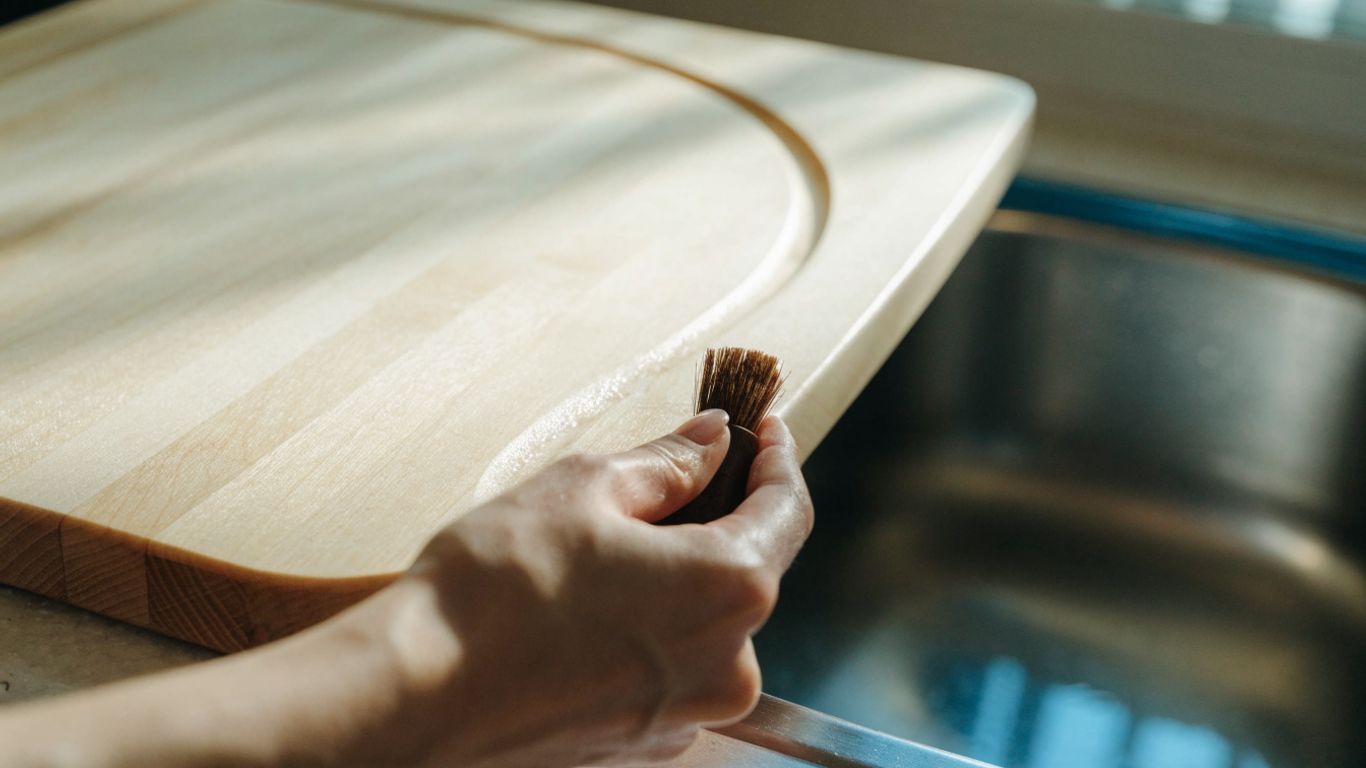
A brush with soft bristles can follow the curve of a groove and lift crumbs from its corners. Pick one that fits the channel without needing to force it down. A clean dish brush or a small vegetable brush works; the right shape matters more than stiff bristles.
Use dish soap and warm water
Mild dish soap and warm water handle ordinary food residue without making the cleaning routine complicated. Use enough water to wet the brush and groove, not so much that the board sits in a puddle. You can use the same basic full-board washing routine for maple boards when the rest of the surface needs cleaning, too.
| Tool or supply | Useful for | Keep in mind |
|---|---|---|
| Soft brush | Scrubbing along the channel | Choose bristles that are not stiff |
| Dish soap | Cutting grease and food residue | Use a mild everyday soap |
| Clean cloth | Wiping away suds and water | Rinse it as needed |
These basics are enough for routine cleanup. The brush does the detailed work, while the cloth helps clear suds from the surrounding surface.
Keep abrasive pads and harsh cleaners out of the routine
Steel wool, rough scouring pads, and aggressive scraping can leave the wood rough or damage the groove’s edges. Harsh cleaners are unnecessary for routine washing and may not be suitable for a food-contact surface. Gentle, thorough scrubbing is a better default than adding force or chemicals.
How do you clean the juice groove step by step?
Start by clearing loose scraps, then wash the channel and rinse the full board. Work along the entire groove instead of concentrating on one spot, especially where the channel curves or meets a corner. A careful rinse matters because soap and loosened debris can collect in the same narrow space.
Remove loose food scraps first
Brush or wipe out visible crumbs before adding water. This keeps them from turning into a wet paste that is harder to move around the channel. If scraps are packed into a corner, lift them gently with the brush or a soft cloth rather than digging at the wood.
For an easy first pass, move around the board in a consistent direction:
- Brush scraps from each corner toward an open section of the groove.
- Wipe the loosened debris off the board and into the sink.
- Check the channel again for bits that have shifted rather than lifted.
Once the loose food is gone, you can wash the groove without pushing scraps back into it. Give the whole perimeter a quick look before moving on.
Wash the groove with soapy water
Dip the soft brush in warm, soapy water and scrub along the channel in short passes. Follow the groove’s curves, using light pressure where residue clings; there is no need to bear down on the wood.
Rinse the brush if it picks up food, then continue until the channel feels clean rather than slick or gritty. Wash the flat surface around the groove as well, since juices and crumbs can spread beyond the channel.
Rinse the channel and the rest of the board
Rinse the groove thoroughly, then rinse the rest of the board so no suds or loosened residue remain. Turn the board as needed to direct water through the full channel. For general wooden-board care beyond the groove, see this maple board cleaning guide.
How do you remove dried-on residue and lingering odors?
Dried food usually needs a little time and gentle friction, not a blade or a long soak. Work at residue with a damp cloth or soft brush, then rinse and inspect the channel. If an odor remains after cleaning, wash the board again and dry it well; a lingering smell can be a reason to give the affected area extra attention.
Loosen stuck-on food without gouging the groove
Lay a warm, damp cloth over a stuck patch briefly to soften it, then brush along the channel. Avoid using a knife tip or another sharp tool to pry at the wood. If the residue resists, repeat the damp-cloth and brush pass instead of increasing pressure.
Use a baking soda paste for stubborn residue
For a stubborn patch, make a small paste of baking soda and water and rub it gently with a soft cloth or brush. Keep the application local, then rinse the area well so powder does not remain in the groove. This is a measured step for a persistent spot, not a replacement for ordinary soap-and-water washing.
Avoid soaking a wooden board to soften debris
Do not leave a wooden board in a sink or fill its groove with standing water. A damp cloth can soften a small patch without wetting the whole board for an extended time. Afterward, wash and rinse as usual, then dry the board promptly.
How should you sanitize after raw meat or poultry?
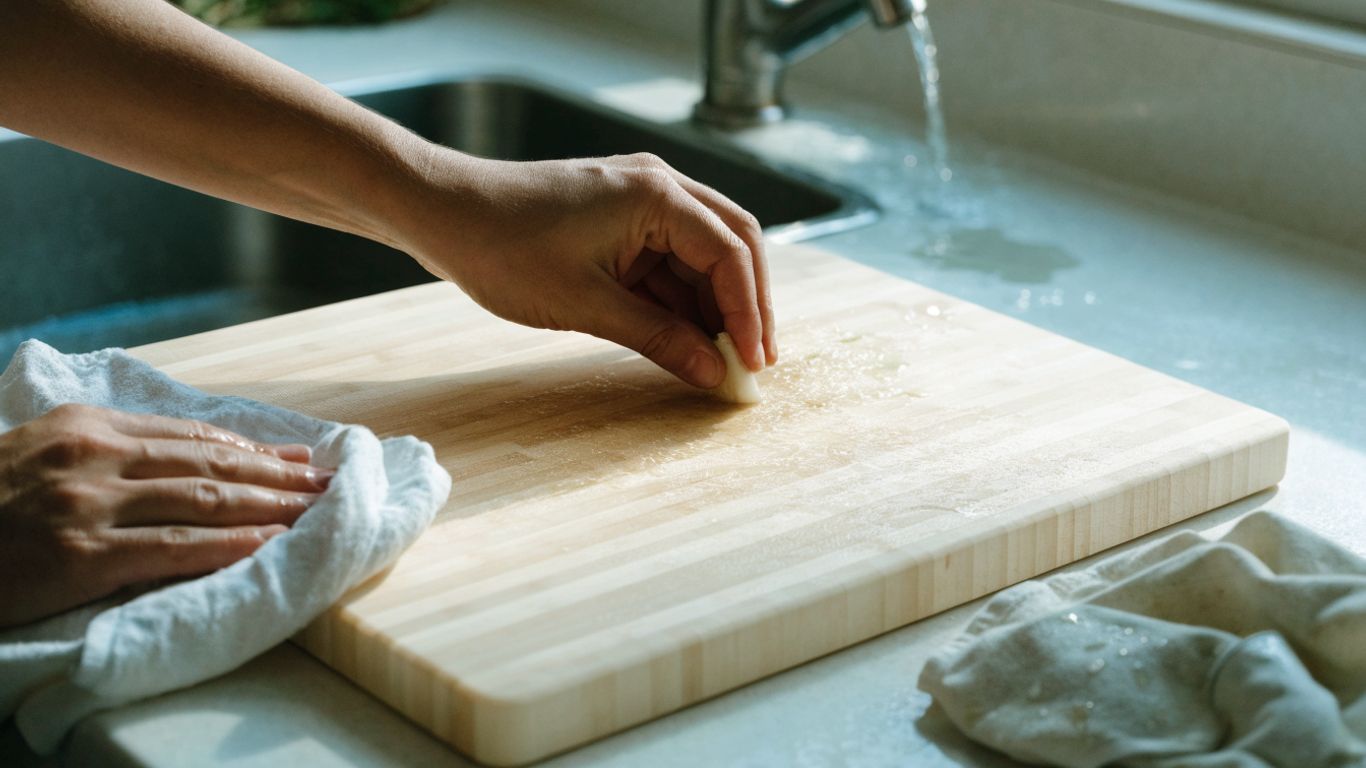
After raw meat or poultry touches the board, clean it before applying any sanitizer. Washing removes food and residue that could otherwise remain in the groove; sanitizing is a separate step. For additional guidance on the sequence, read these raw chicken cleanup steps for maple boards.
Clean the board before applying sanitizer
Wash the groove and the rest of the board with dish soap and warm water, scrubbing any area that contacted raw food. Rinse away suds and visible residue before moving to a sanitizer. A clean surface makes it easier to follow the sanitizer’s directions as written.
Follow the product label for food-contact surfaces
Use a sanitizer labeled for food-contact surfaces, and follow its directions for how to apply it and whether a rinse is required. Do not guess at a dilution or contact time. Keep the board out of use until you have completed the label instructions and the board is ready to dry.
Never mix bleach with other cleaners
Never combine bleach with vinegar, ammonia, or other cleaning products. Use one product at a time and follow its label, including any instructions about rinsing before another product is used. That simple rule avoids a risky chemical mix and keeps the cleaning steps clear.
How should you dry and care for the board?
After washing, remove standing water and let the board air-towel-dry right away and stand it on edge. The groove deserves a final wipe because water can linger in its narrow channel after the broad surface looks dry. Condition wooden boards only when they are fully dry, following the care product’s directions.
Wipe away standing water from the groove
Run a clean cloth along the channel to pick up beads of water and any final crumbs. Check the corners, where water can sit unnoticed. Then wipe the rest of the board before setting it upright to dry.
Let the board air-towel-dry right away and stand it on edge
Stand the board on its edge with air able to reach both sides. Avoid laying it flat on a wet counter or putting it away while damp. For more detail on cleaning a wooden board after cooking, use the same hand-washing, towel-drying and upright-storage approach.
Condition wood only after it is fully dry
Once the board is completely dry, you can apply a suitable conditioner if the wood needs it. Board Balm Cutting Board Conditioner is a beeswax and mineral oil conditioner that helps moisturize dry wood, enhance its natural grain, and leave a smooth, non-greasy finish. Use it as a care step, not as a cleaner, and keep it off the board until washing and drying are finished.
If the wood feels dry, a light application of Board Balm can help moisturize it; follow the product directions and wipe away excess. The point is to condition dry wood, not to coat a damp board. That timing keeps cleaning and conditioning as separate steps.
What cleaning mistakes should you avoid?
Most groove-cleaning problems come from leaving residue or water behind, or using more force than the channel needs. A quick final inspection catches those issues before the board is put away. The groove is a working surface, so treat changes in its texture or shape as useful clues.
Don’t leave water pooled in the channel
Water left standing in the groove can keep the wood damp longer than the surrounding surface. Wipe along the channel after rinsing, especially at bends and corners, then towel-dry the board right away and stand it on edge. A cloth pass takes seconds and is easier than dealing with a board that was stored wet.
Don’t put a wooden board in the dishwasher
Hand-wash a wooden board with mild soap and warm water; do not put it in the dishwasher. The long wash cycle and heat are not a substitute for careful cleaning by hand. A brush lets you reach the groove directly without subjecting the whole board to that cycle.
Check the groove for cracks, rough spots, or trapped debris
As you clean, run your eyes along the channel and look for cracks, rough patches, or food that will not rinse away. Do not gouge at a rough spot with a sharp tool. If a groove is damaged or holds debris despite careful cleaning, pause using the board for food prep until you can assess its condition.
What to remember when you clean a cutting board juice groove
A clean juice groove comes down to a soft brush, warm soapy water, a thorough rinse, and careful drying. After raw meat or poultry, clean first and sanitize according to the product label. Take a moment to check the channel before putting the board away, and routine cleanup stays simple.
Best for
- Soft brush: everyday scrubbing along the channel.
- Baking soda paste: stubborn, dried-on residue.
- Clean cloth: wiping away suds and standing water.
- Sanitizer labeled for food-contact surfaces: after raw meat or poultry, once the board is already clean.
Frequently Asked Questions
These quick answers cover common questions about groove cleaning, residue, and safe care. For a wooden board, gentle hand washing and thorough drying are the reliable basics.
What is the easiest way to clean a cutting board juice groove?
Remove scraps, scrub the channel with a soft brush and warm soapy water, rinse the full board, then wipe the groove and air-towel-dry the board right away and stand it on edge.
Can I use a toothbrush to clean the groove?
A clean, soft-bristled brush that fits the channel can help reach corners. Use light pressure and rinse away loosened food and soap.
How do I remove dried food from a juice groove?
Place a warm, damp cloth over the residue briefly, then gently brush it loose. Repeat rather than prying with a knife or soaking the board.
Can I use baking soda on a wooden cutting board groove?
A small baking soda and water paste can be used gently on stubborn residue. Rinse the area thoroughly afterward and return to ordinary soap-and-water cleaning.
How should I sanitize a board after raw chicken?
Wash and rinse the board first, then use a sanitizer labeled for food-contact surfaces according to its directions. Do not mix cleaning products.
Should I soak a wooden cutting board?
No. Clean it by hand, avoid leaving water pooled in the groove, and wipe it dry after rinsing.
How do I dry a cutting board with a juice groove?
Wipe standing water from the channel and the rest of the board, then stand it upright so air can reach both sides as it dries.
What should you do next?
- Keep a soft brush that fits your groove next to the sink.
- Wash the groove with warm soapy water right after each use.
- Wipe standing water out of the channel and towel-dry the board right away and stand it on edge.
- Set up for your next roast with board setup for a roast dinner.
- Learn the full routine for one wood type in how to care for a teak cutting board.
SEE AN EXAMPLE