CARE GUIDES
Honing vs Sharpening: What Each One Does
Learn honing vs sharpening, how to choose the right method, and how to keep a kitchen knife’s edge in good shape.
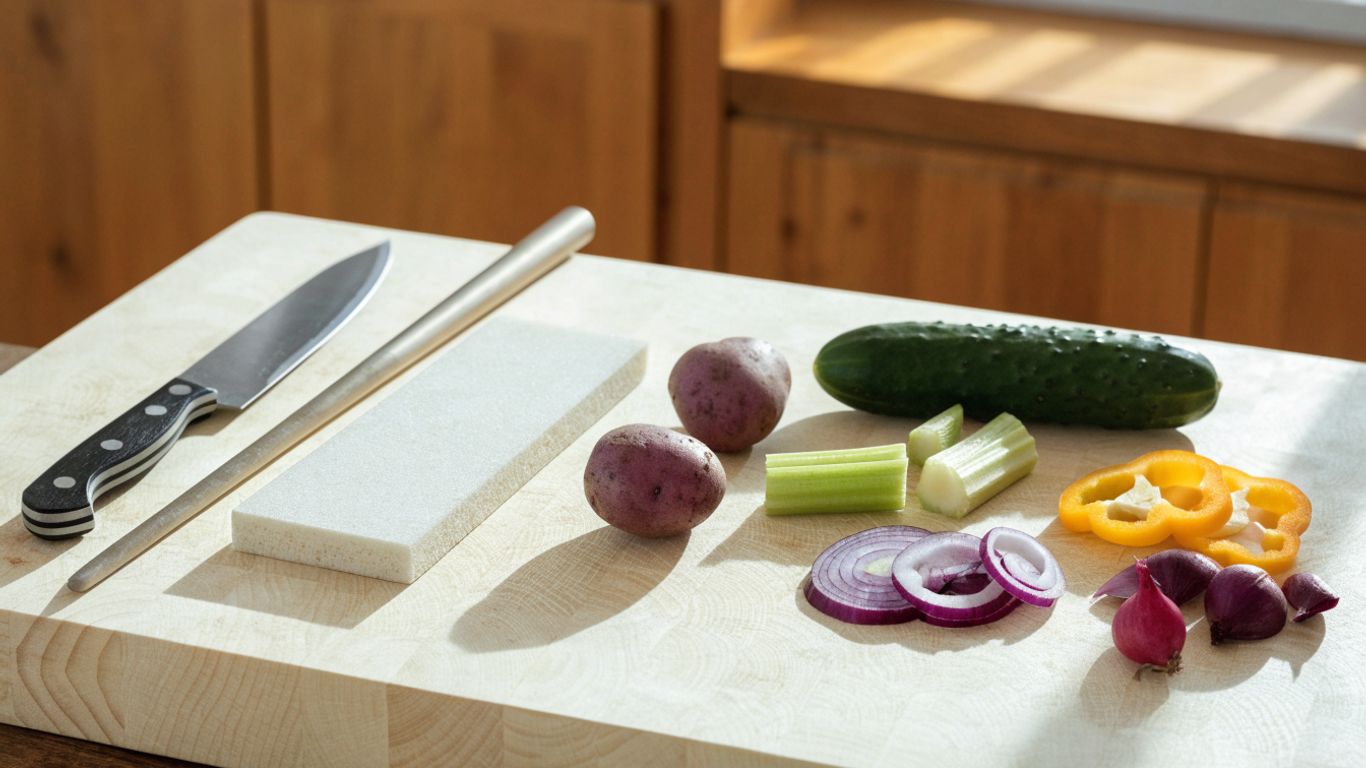
Honing and sharpening do different jobs
Honing vs sharpening comes down to maintenance versus rebuilding: honing helps realign a slightly rolled edge, while sharpening removes metal to form a fresh edge. If your knife has stopped cutting cleanly, the right choice depends on whether its edge is misaligned or worn away. This guide is for home cooks who want to tell the difference and care for a knife without removing more metal than needed.
What honing does to a knife edge
A knife’s thin edge can bend or shift slightly during ordinary cutting. A smooth honing steel can help bring that edge back into alignment, so the blade feels more precise again. Honing is a maintenance step, not a way to create a new edge, and it works best when the knife is still reasonably sharp.
What sharpening removes from the blade
Sharpening abrades a small amount of metal from the blade to create a new cutting edge. You can do this with a whetstone, an abrasive rod, or a pull-through or electric sharpener, depending on the tool and your comfort level. The goal is to restore a worn edge, not to grind away metal unnecessarily; use a method that suits the knife and follow the tool maker’s directions.
Why honing cannot restore a truly dull knife
If the edge has worn down, honing has little remaining edge to realign. Repeated passes on a smooth steel may make the knife feel temporarily different, but they cannot replace the metal that has been worn away. When routine honing stops improving the cut, sharpening is the next step.
How to tell the difference in everyday use
Pay attention to changes in cutting, not just how the blade looks. A knife that has become a little less precise after regular use may respond to honing; one that slides over a tomato skin or crushes a ripe tomato may need sharpening. The most useful distinction is whether the existing edge can still cut cleanly after a few careful honing strokes.
Why knives lose their edge
Knives lose sharpness gradually as the fine edge meets food and other surfaces. Sometimes the edge bends slightly; sometimes it wears down or gets damaged. Knowing which change has occurred helps you choose a sensible repair rather than reaching for an abrasive tool every time a cut feels awkward.
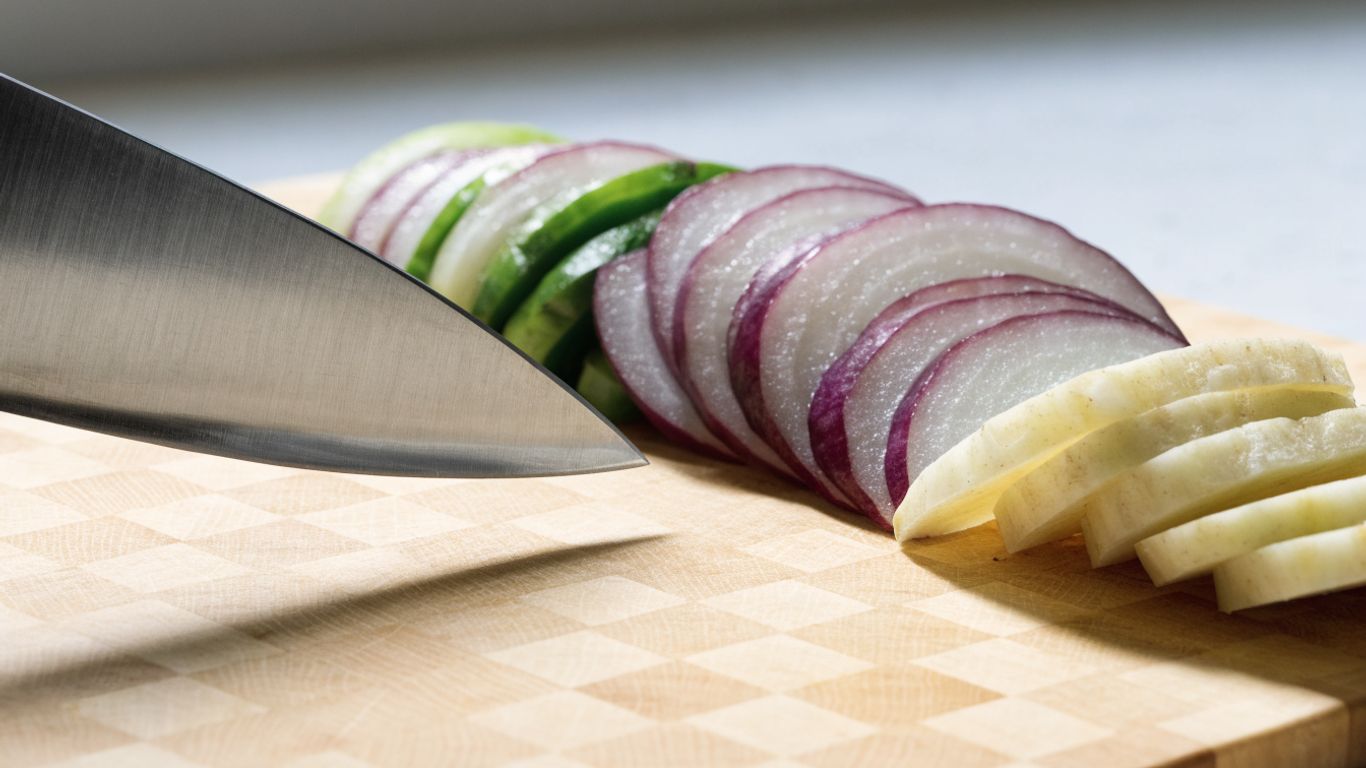
How repeated cutting affects the edge
Each cut puts pressure on a very small section of the blade. With continued use, the edge can roll out of alignment, wear away, or develop small areas of damage. A knife used daily may need attention sooner than one used occasionally, but there is no single schedule that fits every cook, knife, or task.
What rolling and chipping look like
A rolled edge is generally too small to see clearly without magnification; you are more likely to notice that the knife cuts less cleanly. A chip is a missing section of the edge and may show as a visible notch, especially if it is large. Honing may help with minor misalignment, but a chip usually calls for sharpening or repair, with the method depending on its size and the knife.
How cutting surfaces and habits speed up dulling
Hard or abrasive contact can wear an edge faster, as can scraping the blade sideways across a surface. Cutting with a controlled motion and using a suitable surface can reduce unnecessary wear. For a broader look at how the work surface affects knife performance, see this guide to cutting surface and knife sharpness.
A few ordinary habits can also help protect the edge between sharpening sessions:
- Use a controlled slicing or chopping motion instead of striking forcefully.
- Avoid twisting the blade while it is buried in firm food.
- Do not scrape ingredients with the knife’s sharp edge; turn the blade and use its spine.
- Clean and dry the knife after use, then store it so the edge does not knock against other tools.
These small changes will not prevent normal wear, but they can reduce avoidable knocks and abrasion. If the knife still struggles after you adjust your technique and hone it, consider whether the edge needs sharpening.
Why a knife can feel dull even when it only needs honing
A slightly rolled edge may drag through food or require more effort, even though the blade has not lost much metal. That can make a knife feel dull before it is truly worn down. Try a few light honing strokes, then check the cut; if performance does not improve, do not keep repeating the motion in the hope that it will sharpen the blade.
The tools used for honing and sharpening
The tool you choose determines whether you are realigning an edge, abrading it, or doing some of both. A smooth steel is different from an abrasive ceramic rod, and neither works exactly like a whetstone. Compare the tool’s purpose, your experience, and the knife maker’s care guidance before you begin.
Honing steels and what they’re made to do
A smooth steel honing rod is used mainly to realign a slightly rolled edge. It does not work like a sharpening stone, so it is not the right fix for a blade that has worn down or chipped. Use light pressure and controlled strokes; frequent forceful passes do not make a dull knife sharp.
Ceramic rods for light edge maintenance
Ceramic rods have an abrasive surface and can remove a small amount of metal as the knife passes over them. That makes them different from a smooth steel: they can refresh an edge, but they can also wear it if used aggressively or too often. If you choose a ceramic rod, check its instructions and use gentle, consistent strokes.
Whetstones for sharpening and edge repair
A whetstone sharpens by abrading the blade as you move it across the stone at a consistent angle. Some stones use water, while others have different preparation requirements, so follow the maker’s directions for the stone you own. Whetstones offer control, but they take practice; for a step-by-step overview, read this guide to sharpening a kitchen knife at home.
The main differences between common options are easier to see side by side. This comparison is based on each tool’s general function and the skill and care its use calls for, not on product testing.
| Tool | Main action | Often suits | Main trade-off |
|---|---|---|---|
| Smooth steel rod | Helps realign a slightly rolled edge | Routine edge maintenance | Does not rebuild a worn edge |
| Ceramic rod | Abrades lightly while refreshing an edge | Light maintenance when used gently | Can remove metal with repeated or forceful use |
| Whetstone | Abrades the blade to form a fresh edge | Controlled sharpening and some edge repair | Requires angle control and practice |
| Pull-through or electric sharpener | Uses an abrasive sharpening mechanism | People who want a guided or powered method | Results and metal removal depend on the tool and its settings |
Choose according to the problem rather than assuming one tool replaces the others. If a knife only needs routine maintenance, a smooth rod may be enough; if it is truly dull, an abrasive method is needed. For more detail on angles and burr removal, see this guide to a consistent sharpening angle.
Pull-through and electric sharpeners: convenience and trade-offs
Pull-through and electric sharpeners guide the blade through an abrasive, which can make the process more straightforward than freehand stone work. Their designs differ, so use only a method appropriate for your knife and follow its instructions rather than forcing the blade through. Convenience still calls for restraint: repeated sharpening removes metal, so stop when the edge cuts well.
When to hone and when to sharpen
Hone when a knife has become less precise but still has a usable edge; sharpen when honing no longer restores clean cutting. The distinction can take a little judgment, especially if the blade has not been maintained regularly. Start with the least aggressive appropriate step, then reassess before removing metal.
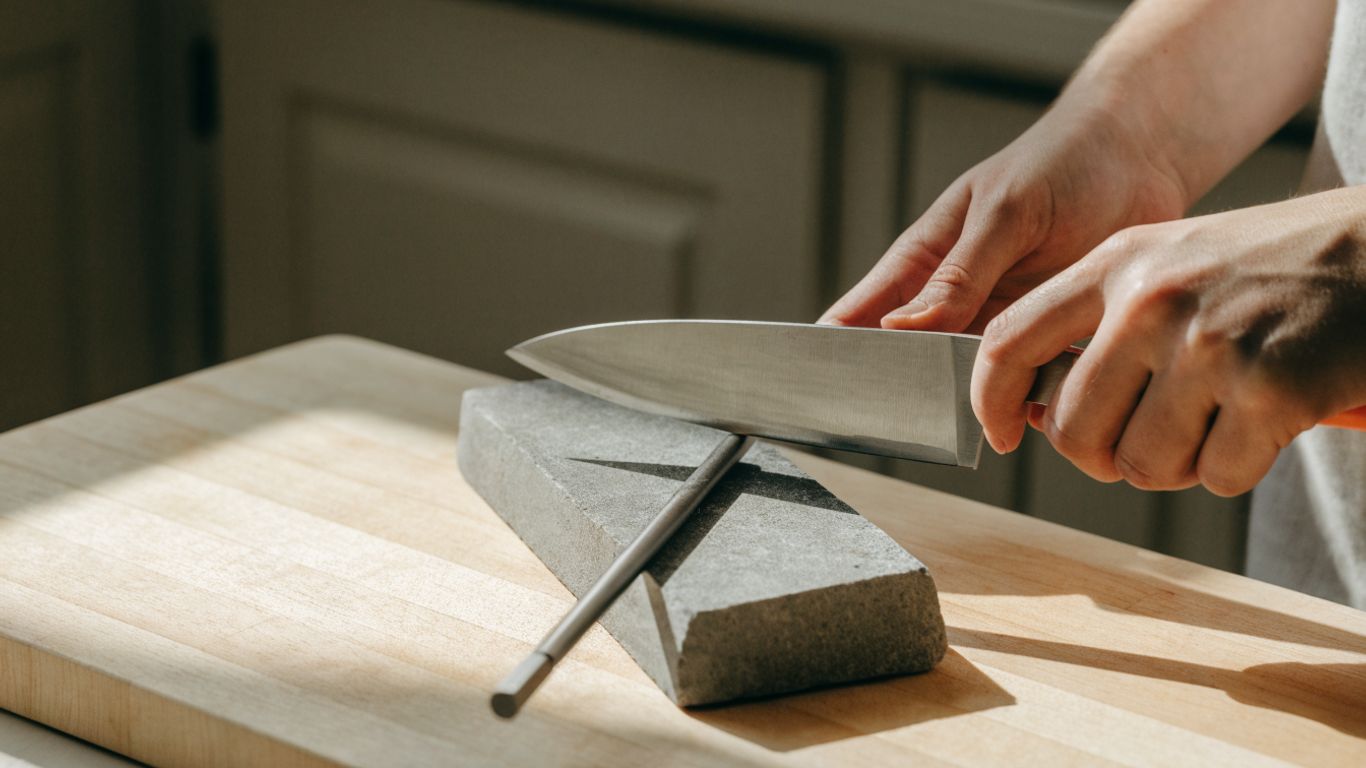
Signs a knife may need honing
If the knife recently began to feel less controlled, but has no visible damage and still cuts with some ease, try light honing. A small improvement suggests the edge may have been slightly out of alignment. Stop after a few strokes and check its performance rather than making honing a long routine.
Signs it needs sharpening instead
A knife that continues to slip on food or crushes soft ingredients after honing likely needs an abrasive sharpening method. Visible chips, a badly damaged edge, or a blade that has been neglected for a long time may need more work than a simple maintenance pass. If the damage is substantial or you are unsure how to fix it, consider a professional sharpener rather than removing metal blindly.
How knife type affects the choice
Different knives have different edge geometries and care instructions. A serrated blade, for example, is not maintained in the same way as a straight-edged chef’s knife, and a knife with a specialized edge may require a particular method. Check the maker’s guidance before using a generic rod or sharpener, especially if the tool is designed for only one edge style.
How to avoid sharpening more often than necessary
Sharpen only when the edge needs it; abrasive passes remove material, and routine honing is not a substitute for good use and storage. Keep the knife from banging against other utensils, and avoid using its edge as a scraper. A few habits make a practical maintenance routine:
- Hone lightly when cutting performance first begins to fade.
- Sharpen only when honing no longer improves the cut.
- Use the tool and angle appropriate for the knife’s edge.
- Store the blade so it cannot rub or collide with other knives.
This approach is not a strict calendar schedule. It lets the knife’s performance guide your next step, which helps avoid unnecessary sharpening while still addressing a genuinely worn edge. See these knife storage options for ways to keep blades protected between uses.
How to hone a knife safely
Honing is simple when you keep the blade controlled and your hands out of its path. Work slowly, use the rod as directed, and do not try to force a dull knife back to life with repeated passes. If you cannot hold the knife and rod securely, pause and choose a safer setup.
Set up a stable, clear workspace
Choose a well-lit, uncluttered counter and make sure the rod’s handle is dry and secure. Keep other tools and loose items out of the way so you can focus on the blade. Hold the rod with its tip resting on a stable surface if that position feels more controlled than holding it in the air.
Match the blade angle to the honing tool
Use the angle recommended for the knife and rod, if the maker provides one. The angle varies between knives, so copying a number from another blade may not be appropriate. If you are unsure, check the knife’s care information or use a tool with an angle guide suited to that knife.
Use controlled strokes along the full edge
Move the blade from heel to tip along the rod with light, even pressure, keeping the chosen angle steady. Alternate sides if the knife’s edge is designed for that approach, and avoid fast, theatrical motions. A few deliberate passes are easier to control and assess than a long series of strokes.
A short visual demonstration can help you picture the motion, but keep the knife maker’s instructions in mind because the recommended angle and technique may differ.
After honing, set the rod down before you inspect the blade. If the knife still does not cut cleanly, stop; it may need sharpening rather than more honing.
Check the result without testing on your hand
Never drag a finger along the edge to judge sharpness. Instead, make a careful test cut through a suitable piece of food, or use another safe method recommended by the knife maker. If the cut is still poor, put the knife aside and reassess the edge and the tool you are using.
How to sharpen a knife and maintain the edge
Sharpening restores a worn edge by removing a small amount of metal, so preparation and control matter. Choose a method you can use consistently, follow its instructions, and stop once the knife cuts well. Do not sharpen a damaged or specialized blade with a generic tool unless its maker says that method is suitable.
Choose a sharpening method that suits your skill level
A guided pull-through or electric sharpener may feel more approachable if you do not have experience maintaining an angle by hand. A whetstone offers more direct control but takes practice, while a damaged edge may call for professional repair. Best for beginners: a guided method that matches the knife; best for practiced hands: a whetstone; best for serious damage: assessment by a qualified sharpener.
Keep a consistent angle and use light pressure
Set up the stone or sharpener according to its instructions, then use the angle recommended for the blade. On a whetstone, steady movement and light pressure help you work evenly along the edge. Avoid pressing hard to speed things up; it can make the angle harder to control and remove more material than necessary.
Remove burrs and check the finished edge
Sharpening can raise a fine burr along the opposite side of the edge as metal is abraded. Follow the stone or sharpener’s instructions to refine the edge and remove that burr, using controlled, light strokes rather than aggressive passes. Then test the knife with a careful cut on food, not by touching the edge with your finger.
Protect the edge with good storage and cutting habits
Once the knife cuts cleanly, protect it from knocks and contact with other metal tools. Wash and dry it according to the maker’s guidance, and store it in a way that keeps the edge from rubbing against other objects. With sensible handling, you can rely on light maintenance between sharpening sessions instead of repeatedly rebuilding the edge.
Frequently Asked Questions
Does honing make a knife sharper?
Honing can help realign a slightly rolled edge, which may improve cutting. It does not replace metal that has worn away, so it will not restore a truly dull blade.
How often should you hone a kitchen knife?
There is no fixed schedule for every knife or cook. Hone when cutting performance begins to fade and a few light strokes are appropriate for the knife.
How can you tell if a knife needs sharpening?
If it still struggles to cut cleanly after careful honing, it may need sharpening. Visible chips or substantial damage may require a more specialized method or professional help.
Can you use a honing steel on every knife?
No. Knife edges and care instructions vary, and some blades need a different maintenance method. Check the maker’s guidance before using a rod.
Is a ceramic rod a honing tool or a sharpening tool?
A ceramic rod is abrasive, so it can remove a small amount of metal while refreshing an edge. Use it gently and follow the tool’s instructions.
Are pull-through sharpeners safe for kitchen knives?
They can be suitable when the sharpener is designed for the knife and used as directed. Check compatibility first, and avoid repeated passes that remove unnecessary metal.
Should you test a knife’s sharpness on your hand?
No. Keep your fingers away from the edge and use a careful test cut through food or another safe method recommended by the knife maker.
SEE AN EXAMPLE
How this guide was put together
The Cutting Board Care Guide team writes and fact-checks every guide on Cutting Board Care Guide. Comparisons are based on maker specifications, published standards and food-safety guidance from sources such as the USDA, and each guide is reviewed and updated when specs or prices change. More about us.